Guide · section 3
Renting a home
Zagreb is compact, and "far from the centre" here means twenty minutes by tram, not an hour and a half. That widens your options considerably, as long as you do not fixate on the two neighbourhoods everyone has heard of.
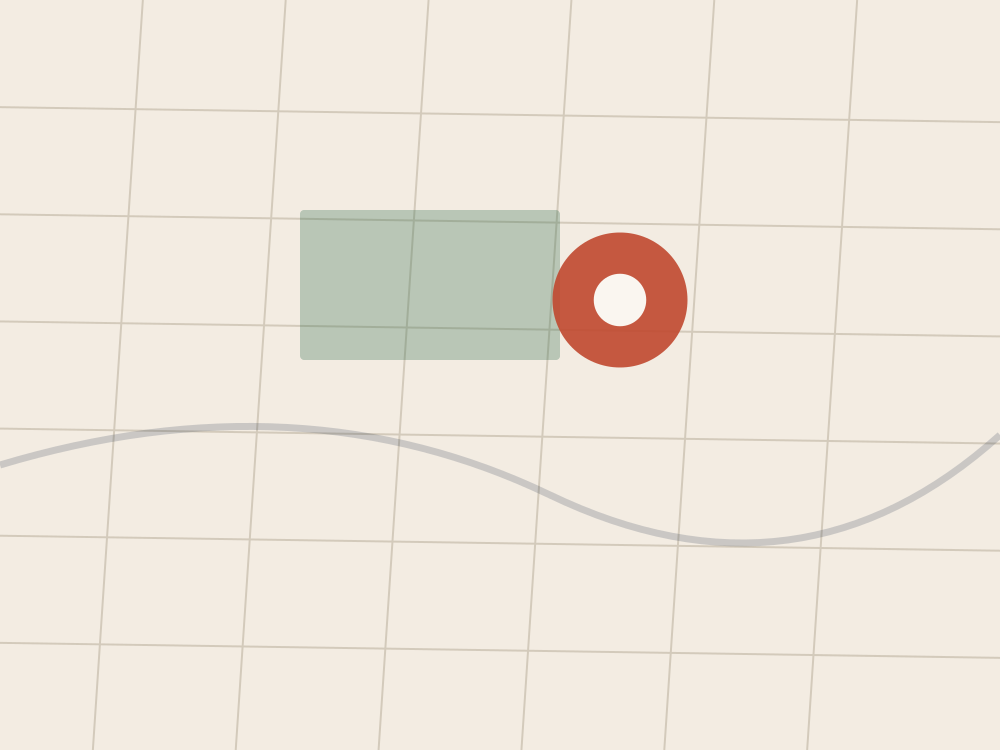
How the city is laid out
The Sava river splits Zagreb in two, and that is the division worth understanding first.
North of the Sava
The centre (Donji grad) — Austro-Hungarian blocks, high ceilings, everything walkable. Expensive, noisy at weekends, painful for parking, and the buildings are old with uneven repair work since the 2020 earthquake.
Gornji Grad and Kaptol — the historic core on the hill. Beautiful, expensive, very little on the market.
Maksimir — beside the big park, quiet, good with children, still close in.
Trešnjevka — a dense residential district with its own market, life and character, and cheaper than the centre.
Črnomerec, Vrapče, Šestine — towards Medvednica, greener and quieter, more houses and flats with terraces.
South of the Sava (Novi Zagreb)
Mostly socialist-era planning: concrete blocks, wide avenues, generous green space between buildings, larger flats and noticeably lower prices. Vrtno Naselje, Siget, Dugave, Travno are 15–25 minutes from the centre by tram. For a family with a car this is often the sensible choice; for someone who wants bars and cafés on foot, less so.
Price orientation
Orders of magnitude for long-term rentals, so you can gauge the scale. The market moves and prices have risen sharply in recent years — always check current listings.
| Type | Centre and north | Novi Zagreb and outskirts |
|---|---|---|
| Studio | €400–600 | €300–450 |
| One bedroom | €500–750 | €380–550 |
| Two bedrooms | €650–1,000 | €500–700 |
| House / large flat | from €1,000 | from €800 |
These are approximate orders of magnitude, not a price list. Utilities are normally paid separately. Check live listings before budgeting.
Where to look
- Croatian listing portals — the main market, including direct from owners. Listings are mostly in Croatian; browser translation copes fine.
- Estate agents — they charge a commission, typically around one month's rent. In return they save time and help with the contract, which can pay off when you are new.
- Facebook and Telegram groups — fast and commission-free, and also where most of the scams live.
- On foot — notices in building entrances are a real thing, especially in residential districts, and the internet crowd does not reach them.
Viewings and contracts
What to check in the flat
- Heating: what kind, central or its own, and what the previous tenants actually paid in winter.
- Windows and damp — mould in corners and the smell of it are obvious once you know to look.
- Hot water pressure and temperature.
- The state of the wiring and whether there are enough sockets.
- In older centre buildings, cracks and repair work since the 2020 earthquake; ask directly whether a structural assessment was done.
- Noise: if you can, come back in the evening and at the weekend.
- Internet: which provider serves the building and what speed is actually delivered.
What belongs in the contract
- Both parties with OIBs, the exact address, the term and the renewal conditions.
- The rent and precisely what it includes.
- The deposit: amount, conditions for return, and the deadline for returning it after you move out.
- Who pays utilities and against which meter readings.
- An inventory and condition record — attach photographs taken on move-in day.
- Termination conditions on both sides and the notice period.
Confirm separately that the contract will be executed in a way that lets you register your address with it. Some landlords prefer not to declare the rental, and for you that means no registration — and therefore a problem with your residence.
FAQ
How much deposit is normal?
Usually one to two months' rent. Always get the return conditions in writing.
What do utilities cost?
It depends on size, heating type and season. In an old flat with poor windows a winter bill can surprise you — ask the landlord what last winter actually cost rather than for a city average.
Can I rent without an OIB?
A properly executed contract will need one. Getting it is quick and easy — start there.
Do I need an agent?
Not strictly, but for a first home without the language or market knowledge an agent often earns their commission. By your second move you will likely manage alone.
Furnished or unfurnished?
Most of the rental market comes furnished. Unfurnished is rarer and usually tied to longer terms.
Related
Need help with your specific situation?
Tell us what you're dealing with. We'll explain the steps, and tell you honestly if you don't need us.